










Featured case study
Smart Skincare with Lisa
Lisa is an AI-powered skincare chatbot that helps users identify skin concerns like acne, dryness, and pigmentation.
Read the case study
Custom AI models, agents, chatbots and integrations, built around your data and deployed into the systems you already run.
Trusted by
§ Who it's for
We build AI that takes work off your team and puts better answers in front of decision makers: workflow automation, predictive models, generative AI, agents and chatbots. Every solution is designed around a business goal, trained on your data and integrated with your apps, CRM or ERP. You own the code, data and models, with no lock-in.
Custom AI is worth building when the problem is specific to your business, the data to solve it already exists, and a generic tool cannot reach either. These are the situations we see most often.
Operations, finance and support teams who re-key data between systems, read documents by hand or answer the same customer questions every day. AI takes the routine part and leaves people the exceptions.
Leaders sitting on years of sales, usage or operational data with no model turning it into forecasts, risk scores or next-best actions their teams can trust.
Startups and product teams adding chat, smart search, recommendations, image recognition or content generation to an app their users already depend on.
Businesses whose SaaS AI add-ons cannot see their own data, follow their business rules or meet their security and data residency requirements.
Companies with a promising notebook or demo that still needs data pipelines, testing, monitoring and integration before it can run every day.
§ What we deliver
Choose an area to see the services in it.
Text, image and media generation tuned to your brand, content and knowledge.
Agents that plan, act and hand off routine work across your tools.
Round-the-clock support, lead capture and personalized conversations.
AI added to the apps, CRMs, ERPs and workflows you already use.
Models that predict, classify, read and see.
Find the use cases worth building and a roadmap to deliver them.
§ Proof
Featured case study
Lisa is an AI-powered skincare chatbot that helps users identify skin concerns like acne, dryness, and pigmentation.
Read the case study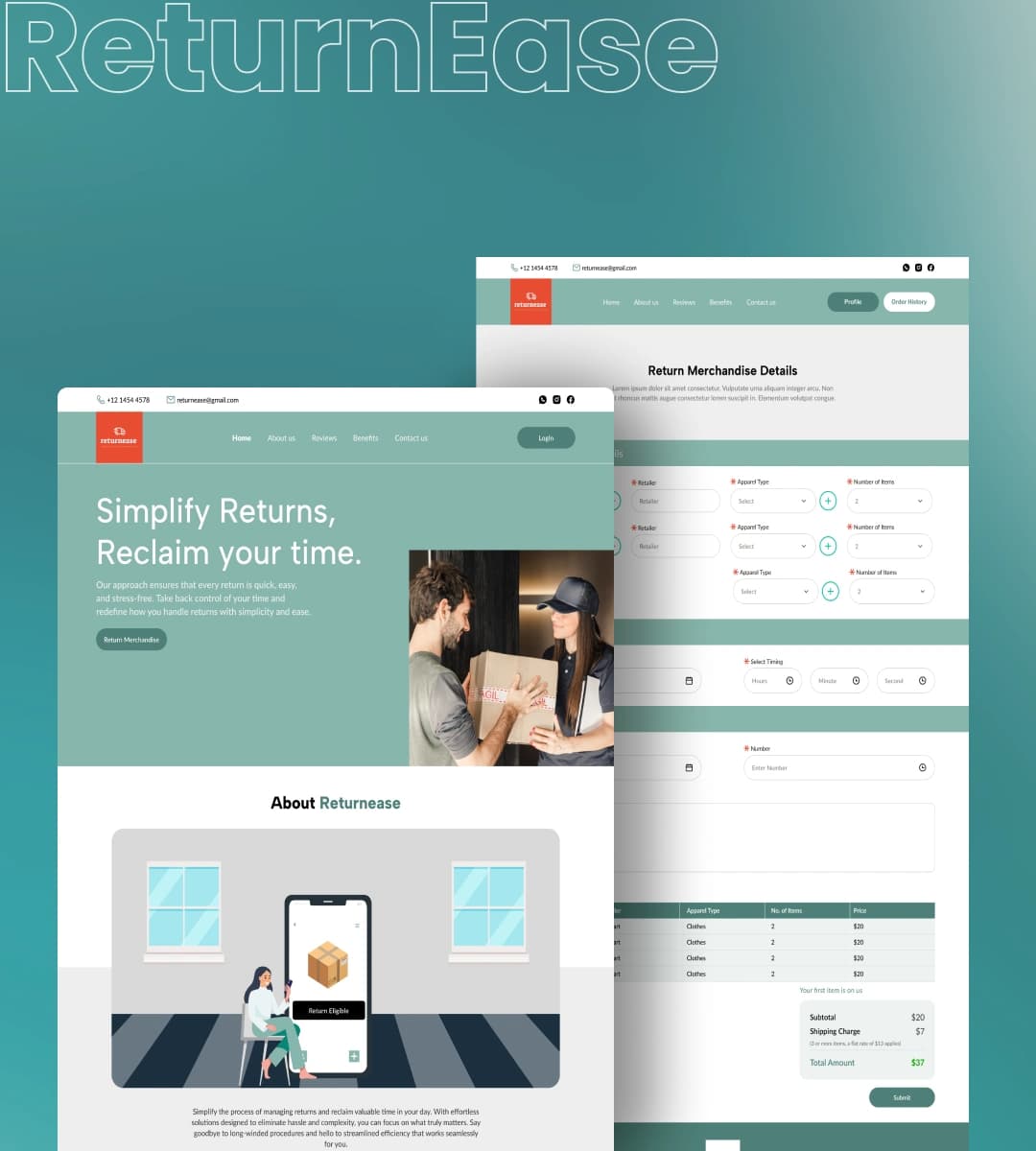 PortfolioReturnEase Website Redesign & E-Commerce
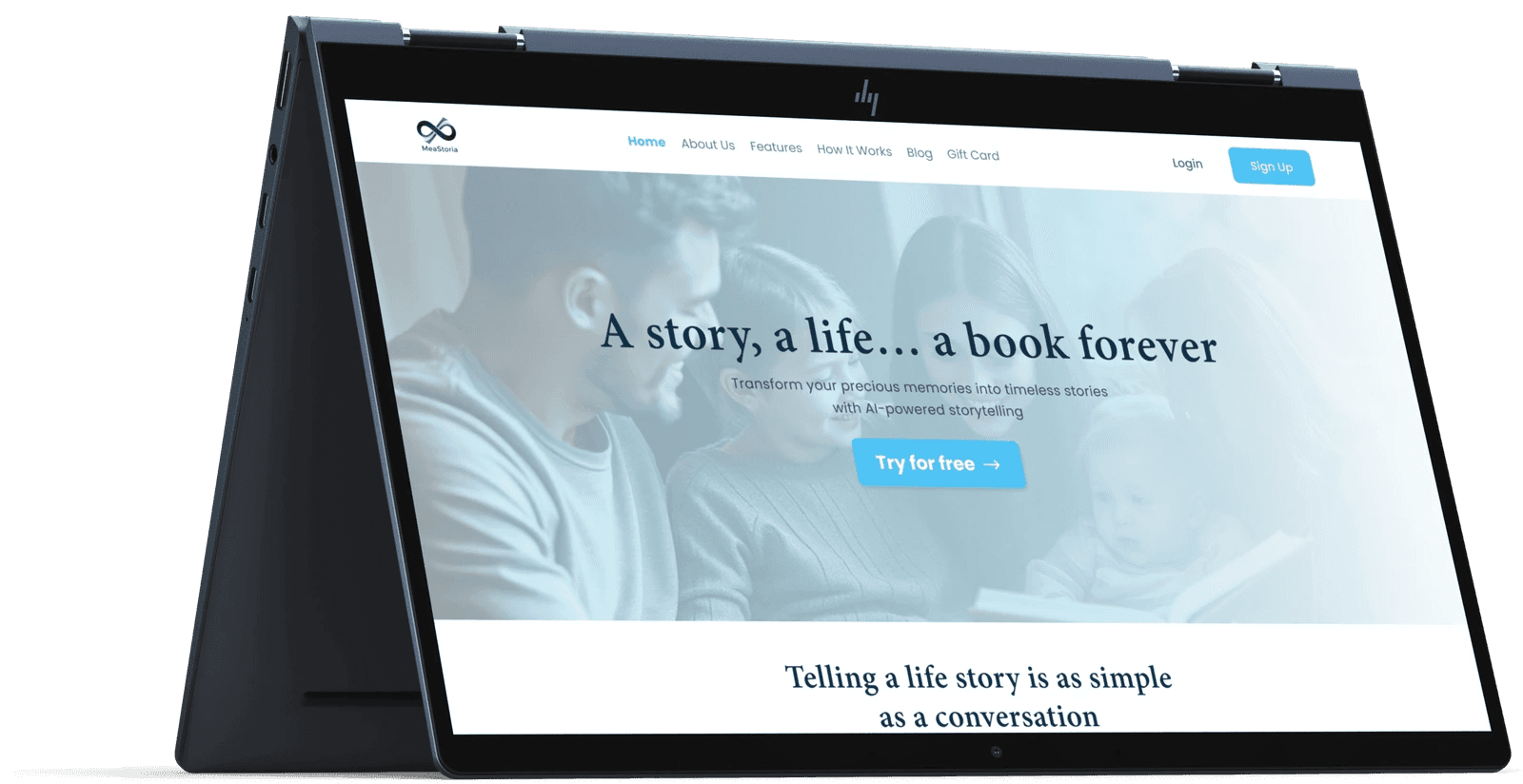 Case studyMeaStoria: AI-Driven Storytelling Platform
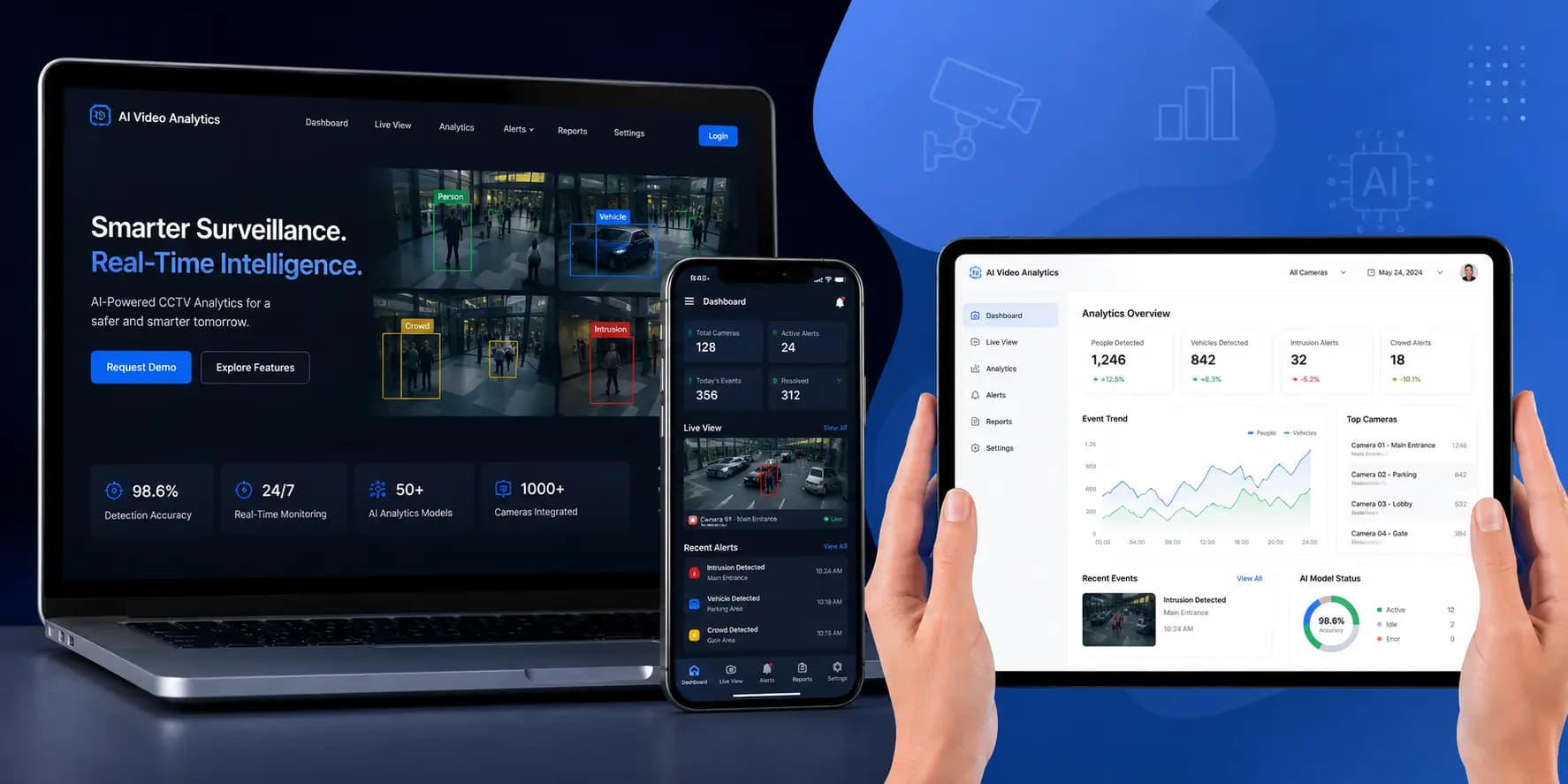 Case studyAI Video Analytics CCTV Intelligence Development
§ Approach
Workshops with your team and a review of your systems and data to find where AI will pay off first.
You receive Prioritized use cases and an AI roadmap
We collect, clean and structure data from internal and external sources so models have a reliable foundation.
You receive Clean, documented training data
We build and compare supervised, unsupervised, deep learning or LLM-based approaches against the business goal.
You receive Working prototype and evaluation results
Models are trained on real business data and tuned for accuracy and robustness with cross-validation and transfer learning.
You receive Production-ready model
We ship through APIs or event systems on AWS SageMaker, Azure ML or GCP Vertex AI and connect it to your apps.
You receive Live AI feature in your systems
MLflow, Prometheus and Grafana track performance, and models are retrained as data and needs change.
You receive Monitoring dashboards and retraining plan
§ Tech stack
 AWS SageMaker
 Azure Machine Learning
 Power BI
§ Engagement
A short, fixed-scope engagement to assess data, shortlist use cases and estimate effort. You leave with a prioritized roadmap whether or not you build with us.
A working prototype on a sample of your real data, built to answer one question: is this use case accurate and valuable enough to take to production?
Defined deliverables, milestones and price for a use case that has been through discovery, from data preparation to deployment.
Data scientists, ML engineers and developers who work as an extension of your team on a monthly basis, for products with an ongoing AI roadmap.
§ FAQs
Most AI products take between 4 and 24 weeks. The range depends on how ready your data is, how much model training and testing is needed, and what deployment looks like. Adding AI to an existing system can take extra time for optimization and validation against live data.
When off-the-shelf tools cannot deliver the automation, predictions or workflows you need, or when your data and processes are what set you apart. We start with a short consulting and strategy phase so each build is tied to a clear business goal and a way to measure return.
Retrieval-Augmented Generation (RAG) connects a large language model to your own documents and data sources, so answers are grounded in company knowledge rather than the model's general training. It improves accuracy and keeps sensitive data under your control, which makes it a strong fit for chatbots, internal knowledge assistants and generative AI tools.
Look at real delivered projects, domain knowledge in your industry, security practices and a clear delivery process. Equitysoft has delivered 680+ projects for 310+ clients since 2018, is ISO 27001 certified and GDPR-compliant, and you keep ownership of the code, data and models.
We monitor model performance, retrain when data drifts, tune for speed and cost, and apply security updates. That keeps the solution accurate, compliant and aligned with how your business changes over time.
Security is applied at every phase: secure data handling, access controls, model governance and compliance-driven development (including GDPR and HIPAA where relevant). Our ISO 27001 certified processes cover the full development lifecycle.
Less than many teams expect. Generative AI and RAG projects can start with your existing documents and knowledge base. Predictive models need enough historical records that include the outcome you want to predict; we check volume and quality in discovery and tell you plainly if the data is not ready yet, along with what to collect first.
Most projects start with a hosted model such as GPT, Gemini or Claude, combined with your data through RAG, because it is the fastest route to value. Training or fine-tuning a model makes sense when you need lower running costs at high volume, offline or on-premise deployment, strict data residency or behavior a general model cannot learn from prompts. We compare both on your use case before recommending one.
Cost depends on the use case, data readiness, integration work and how the solution will be hosted. We give a fixed estimate after a short discovery, and many clients start with a proof of concept so the larger investment is only made once the idea has been tested on real data. Running costs such as model API usage and cloud hosting are estimated separately so there are no surprises.
Yes, and for new use cases we recommend it. A proof of concept uses a sample of your real data to test accuracy and value against the success metric agreed in discovery. If it meets the bar, the same code becomes the base for the production build; if it does not, you have spent a small budget to learn that early.
§ In detail
A one-page agreement on the problem, the current baseline, the metric that defines success and the data sources involved, signed off before development starts.
Cleaned and labeled datasets with a data dictionary and repeatable pipelines, so the model can be retrained without starting from scratch.
The working model, prompt chain or RAG pipeline, plus test results on held-out data and a plain-language note on where it performs well and where it does not.
Secured endpoints connected to your app, CRM, ERP or data warehouse, with authentication, rate limits and error handling in place.
Dashboards for accuracy, latency and running cost, drift alerts, and a schedule for when and how the model is retrained.
Repositories, model artifacts, infrastructure scripts and runbooks transferred to you. You own everything we build.
Encryption in transit and at rest, role-based access, and only the data the use case needs. Personal data is masked or kept out of prompts and training sets where possible, in line with GDPR.
Low-confidence predictions and high-impact actions go to a person for review. Thresholds are agreed with your team and adjusted as trust builds.
For scoring and prediction models we show which inputs drove each result (for example with SHAP), so analysts and auditors can follow the reasoning.
We choose the smallest model that meets the target, cache repeat requests and track cost per call, so running costs stay predictable as usage grows.
§ Contact
Book a free consultation. We will review your use case and data and suggest the most practical first step.